News Archive |
|||||
|
ASEAN Financial Integration in 2015 Prompts FICOBank to
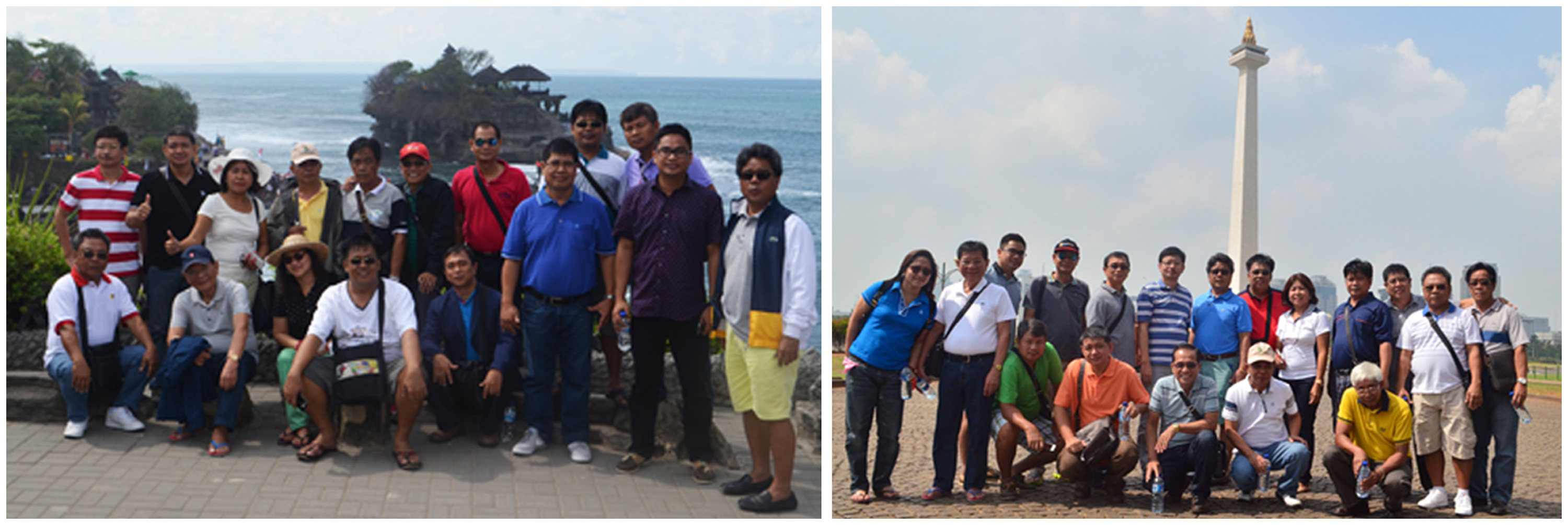
As agreed upon by the leaders of the 10 Southeast Asian nations, the ASEAN Economic Community (AEC) will be formed in 2015. Financial integration is a major component of the AEC blueprint, which includes financial services liberalization, capital account liberalization, the development and integration of capital markets, and the development of settlement systems. As the Philippine financial market will be opened up to foreign banks, smaller banks will soon be edged out or eventually wiped out, as increased competition will reduce profitability and margins. In view of this, it is essential for FICOBank to reinforce its banking capability and competitive strength. To familiarize itself with the regional financial markets, the Bank took a bold step, in its “journey to a thousand miles,” to go outside the country and expose itself to a more-advanced business environment. In May 2008, the Board of Directors, together with the President & CEO and two senior officers, went to Beijing, China to visit the Beijing Rural Commercial Bank (BRCB) and learn from its winning ways of doing business. Before becoming one of the most successful banks in China, being one of the Top 10 Influential Brands in the Chinese Banking Sector and ranked as the 457th of the World’s Top 1000 Banks, BRCB was a cooperative bank. This parallel origin served as the focal point of FICOBank when it singled out BRCB as the subject of its first outbound study mission. Through the assistance of the Philippine Embassy in China, the group was able to meet with the top-management team of BRCB, led by its President, Dr. Jin Weihong. A briefing on the profile, operation, best practices and corporate culture of the host bank, which enabled it to transform from a cooperative bank to a very successful and prominent rural commercial bank in China and in the whole world, was given to the delegation of FICOBank, the visiting bank. It was indeed a very meaningful study mission for the directors and officers in attendance. With the lofty intents to pursue and sustain its historical growth, improve its ownership structure, strengthen further its governance capability and expand its business operation, the Board and Management perceived the need to benchmark its ways of seeing, doing and getting banking things with an exemplary coop bank in order to improve further its own business. The Bank Rakyat, the largest and strongest Islamic cooperative bank in Malaysia, which had successfully undertaken corporate transformation, was so far the best bank then that will serve as FICOBank’s point of reference for its transformation initiative. Thus, a Business Study Mission in Bank Rakyat, at its Head Office in Kuala Lumpur, Malaysia was carried out in March 2012. The delegates of FICOBank had the opportunity to get an insight into the historical development, banking operations, governance, management, practices and perspective of the said bank, which has come a long way over the past 57 years—at that particular point. The participating directors and officers of the Bank, in this second outbound study mission, had also seized the opportunity not only to soak themselves in the sights and sounds of Singapore but also to get an overall sense of its progressive economic environment. In its quest for corporate-brand relevance and business growth, FICOBank made its Business Observation Mission in Jakarta and Bali, Indonesia on November 19-23, 2014. It aimed to find potential opportunities for its business model innovation that will enable it to cross the transition from existing industry paradigm to establishing new model in banking, as the AEC era is now on the horizon. There are 120 banks in Indonesia, broken down into four state-owned banks and 116 private banks. There are also 10 foreign banks and 17 joint-venture banks with foreign ownership. The five prominent banks are the Bank Rakyat Indonesia (BRI), Bank CIMB Niaga, Bank Mandiri, Bank Panin and Bank Negara Indonesia. It was noted that BRI is the largest domestic bank of Indonesia. As observed by the participants, BRI has so many branches, sub-branch offices, micro-banking units and cash outlets that are spread across Java and Bali islands. The five-day rapid appraisal of the urban banking industry in Jakarta and rural banking setting in Bali will be used as benchmark for FICOBank’s banking model innovation. With the three learning-filled and experience-laden Business Study Missions in the Asian countries, the Bank has made the necessary moves to prepare and protect itself from the inevitable shocks and inescapable changes that will be brought about by the impending twin events—the integration of ASEAN financial markets and the full entry of foreign banks in the Philippines, as allowed by Republic Act No. 10641. Be that as it may, with its relevant data, corporate strategy, growth avenues, business drivers and key performance indicators that have been recently laid down, FICOBank is geared up for the next level of banking, which is adjusted to the wider financial market and business competition across the Asian region. And it may not be farfetched for FICOBank to establish its offshore banking units in the near future.
|
|||||
|
|||||